
Project Echo is a first-person spatial puzzle game set inside a massive alien tunnel — a rotating, cylindrical structure where players manipulate gravity to solve traversal challenges. You play as Josie, an explorer who discovers an ancient artifact that lets her lock onto surfaces and rotate the tunnel in real-time.
Inspired by games like Astro Bot, Project Echo takes full advantage of the PlayStation 5 DualSense controller to deliver immersive gameplay through gyro aiming, adaptive triggers, and rich haptic feedback.
Built in Tengine, our in-house engine, Project Echo was created in 6 weeks by a team of 13 students at PlaygroundSquad. I served as Level & Gameplay Designer, focusing on core mechanics, spatial puzzle design, controller feedback systems, and tutorial planning.
Despite the tight timeline and a custom engine, we delivered a polished experience with innovative rotation-based mechanics and a surreal alien atmosphere we’re proud of.
Major Contributions
Level & Puzzle Design:
Designed and iterated the full level progression (tutorial → escalation), focused on readability and pacingProduction / Team Collaboration;
Worked closely with the team to align design intent with implementation constraints, keeping the experience shippable and coherent.Core Mechanic + Interaction Design:
Built the core rotation / spatial-logic gameplay into solvable, learnable beats through level structure and player-facing feedback.Traversal / Platforming Systems:
Designed traversal challenges around the mechanic, keeping flow smooth and preventing dead-ends.
Challenges & Takeaways
The biggest challenge was making rotation feel readable while the level itself was moving. Each layout had to work from multiple orientations, so geometry, sightlines, and platform alignment needed to stay clear after every rotation.Time was also a big constraint. Some planned tutorial and mechanic sections had to be cut or merged, which forced us to focus on the strongest parts of the experience instead of spreading the game too thin.The biggest takeaway for me was that a big mechanic only works if the player understands what changed and why. That pushed me to rely on clear level layout, simple rules, and strong feedback instead of UI pop-ups.
Level design
Project Echo started with a simple question.What if the level itself was the puzzle?I did not want to just place obstacles inside a cool space. I wanted to create a level the player had to understand, rotate, and manipulate to move forward.
The first idea came from architectural concepts like the Panopticon, but it clicked more when I remembered Vah Naboris from Breath of the Wild. I liked the idea of a huge structure rotating around the player, changing the route instead of just decorating it.From there, I started sketching cylindrical tunnel layouts with paths that could connect, disconnect, and change meaning depending on rotation. I also looked at Escher’s Relativity and the surreal hallways of Harry Potter for inspiration, mainly for the feeling of impossible space.
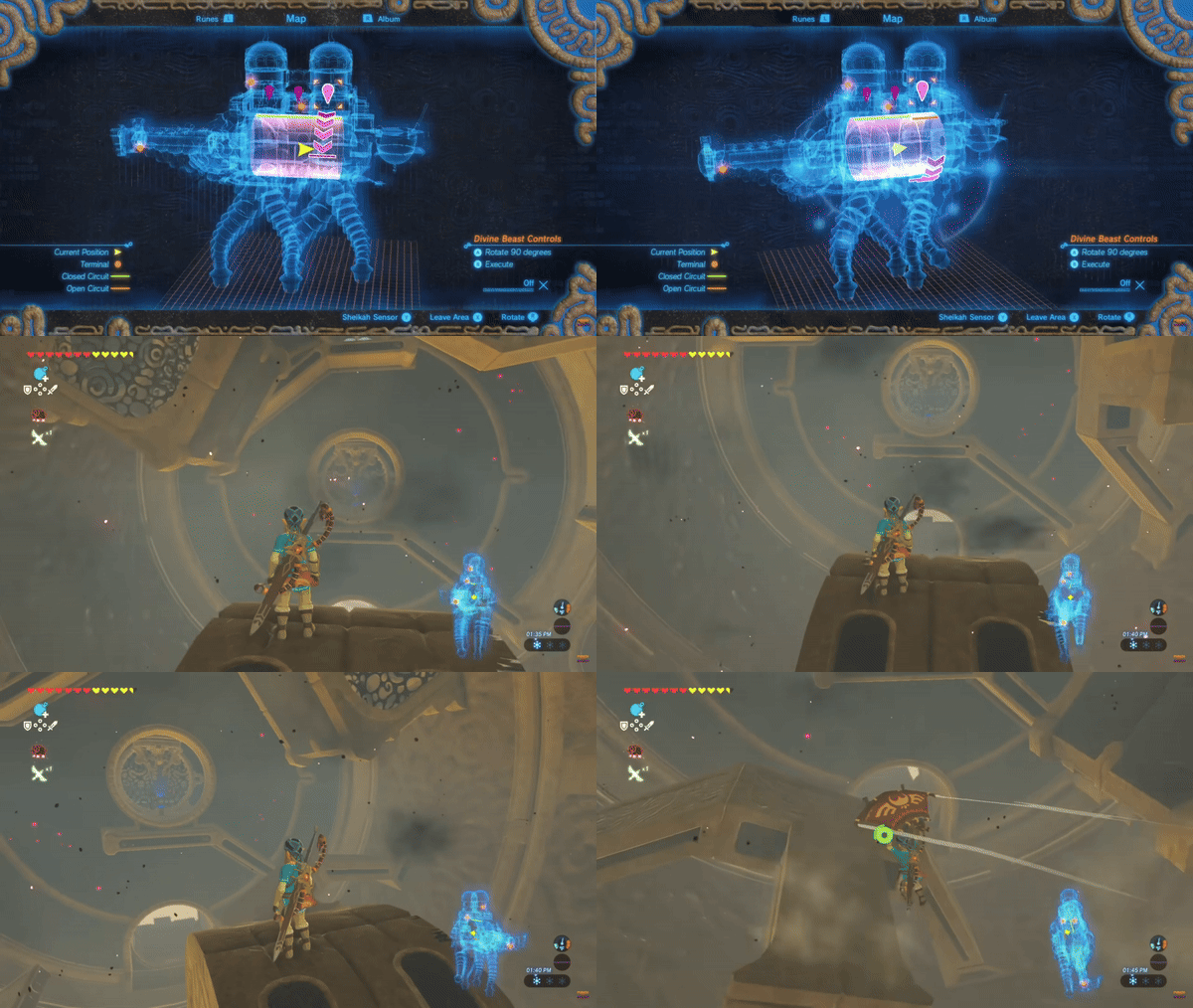
To test the idea quickly, I built a small Unreal Engine prototype where the player could look at a tunnel and rotate it with the mouse wheel.This became an important part of my pitch to the team. It helped me test how the rotation felt in real time, and whether puzzles could work through platform alignment, gravity shifts, and spatial memory.
Roadmap of all levels in the game.
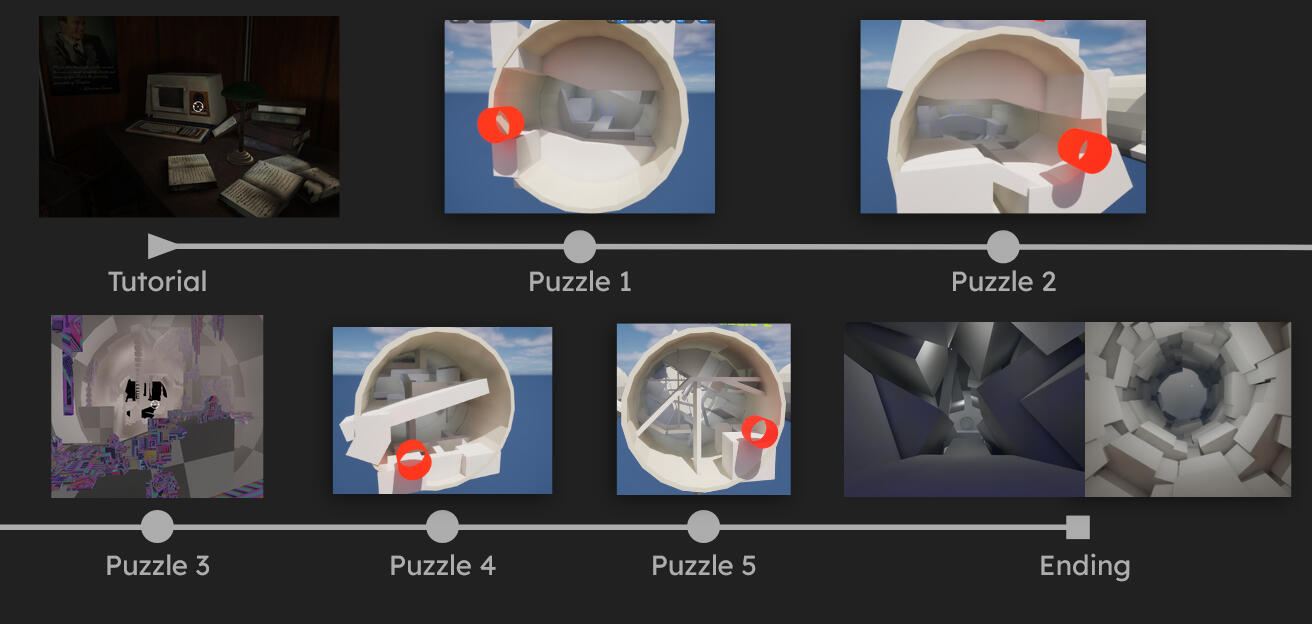
After pitching and validating the prototype, I moved on to designing a full experience across six main puzzle rooms. Each section introduced new mechanics, spatial twists, or visual shifts that built on the player’s existing understanding.Due to time limits, our teammate Ami helped design short tutorial segments to teach each mechanic gradually. These had to be cut or merged to keep the project focused and cohesive, creating a tighter experience that still touches on every system.
Puzzle 1
Puzzle 2
Puzzle 3
Designing for a rotating environment required strong spatial clarity. The space needed to read well from multiple orientations, while the rotation itself had to feel grounded and physical.To achieve this, I worked with smooth rotation combined with a snap-lock system that aligned the cylinder to fixed intervals when released. This kept movement fluid while ensuring platforms and environmental elements always lined up correctly, preserving both readability and puzzle functionality.
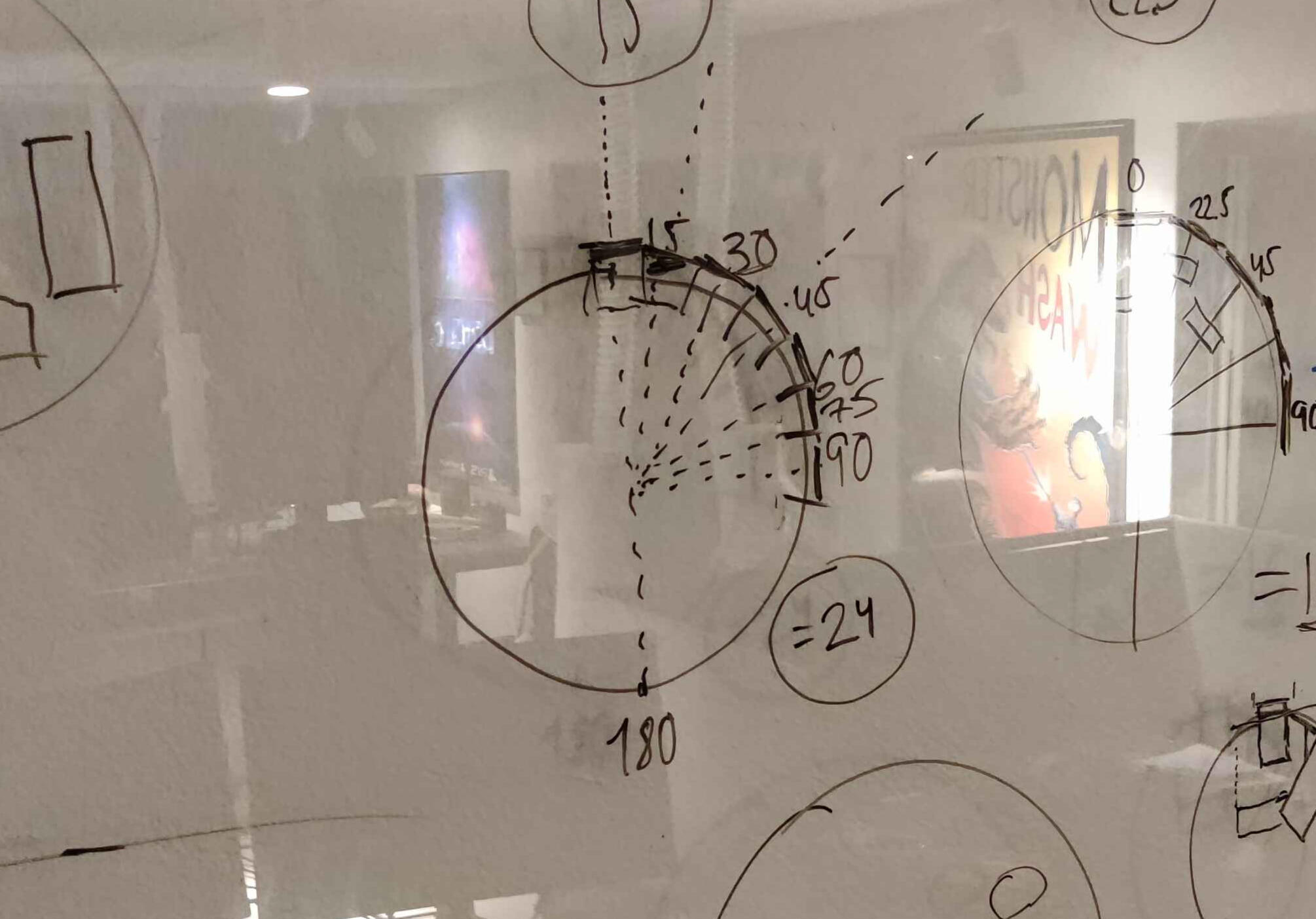
Core Mechanic Design
The core mechanic of Project Echo was rotating massive cylindrical tunnels to solve spatial puzzles and move through the world. Because the whole space could shift around the player, the mechanic had to feel tactile, readable, and physical, not just like a camera trick.
To test the idea early, I built a quick Unreal Engine prototype using simple blueprints. The player could look at a cylinder and rotate it with the mouse wheel, which helped me test the basic feel before we moved into full implementation in Tengine.This prototype helped us see the potential of the mechanic for puzzle design, platform alignment, gravity shifts, and spatial memory.
Player Feedback
Since the player was rotating the level itself, feedback had to be clear and immediate.I helped design the feedback as one connected layer
crosshair, hero device, and DualSense feedback all working together.The goal was to make aiming, locking, and rotating feel consistent, so the player could understand when the tunnel was interactable and when the rotation was active.

Crosshair, hero device, and controller feedback
Break working together to create a cohesive, tactile experience.

Platforming Systems
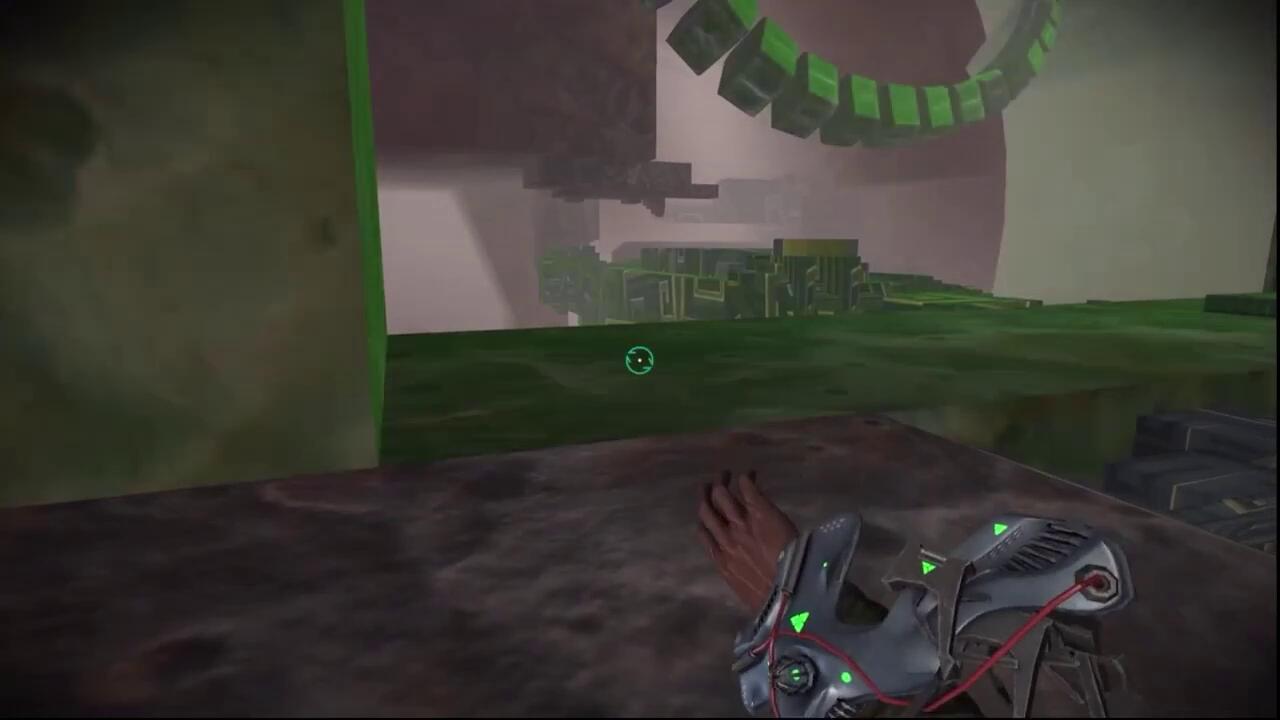
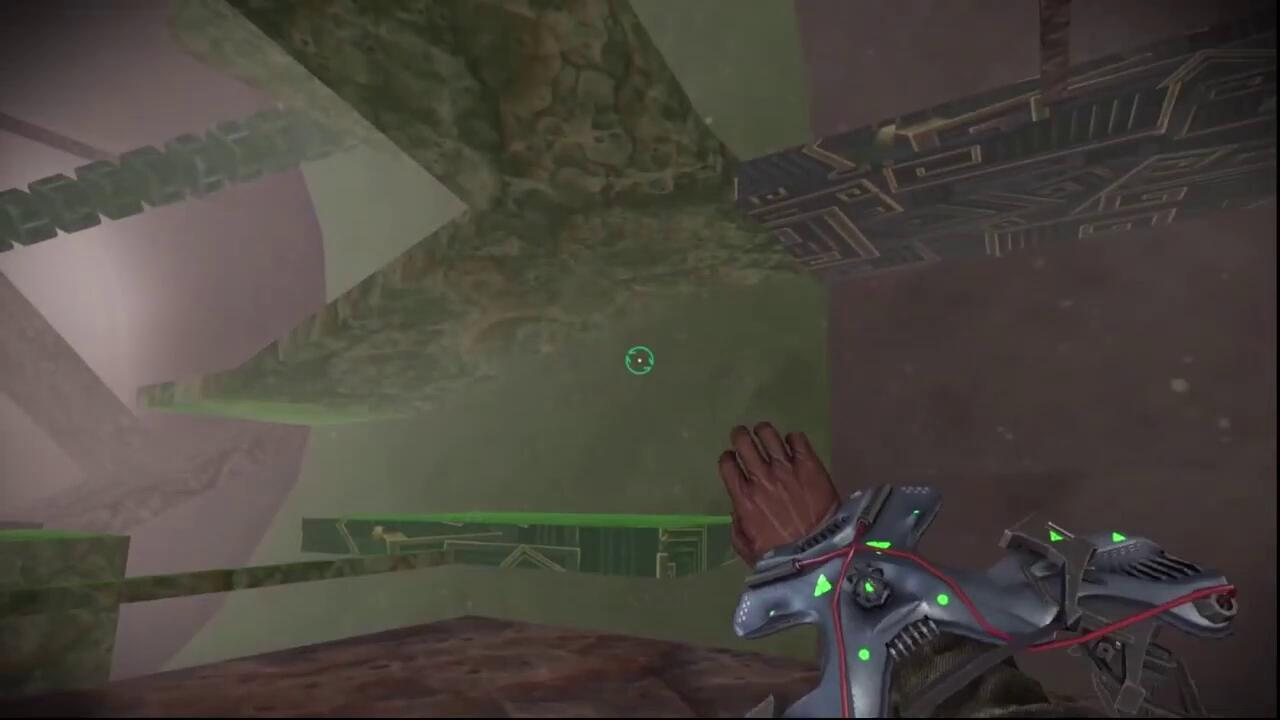
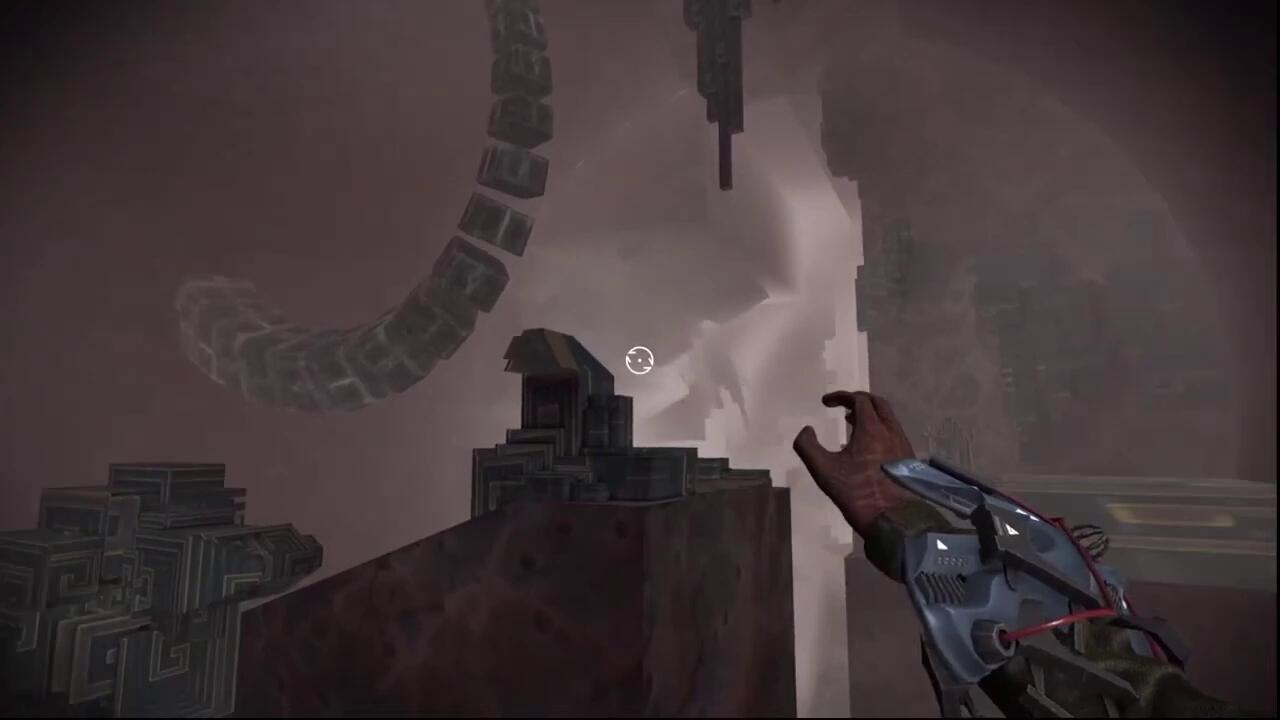
Once the rotation mechanic was working, we needed platforming systems that could survive inside a moving world. I worked on the behavior and feel of different platform types, including
horizontal sliders, vertical lifts, and push/pull platforms.
My focus was making them feel clear and predictable for the player. Each platform type needed a simple purpose, so the player could understand what it did, how it reacted to rotation, and how it helped them move through the tunnel.A big part of the design was avoiding accidental blockers. For example, vertical platforms had to line up with rotated tunnel segments, and push/pull platforms needed to feel heavy but responsive. The goal was to make the platforms support the spatial puzzles instead of fighting against them.
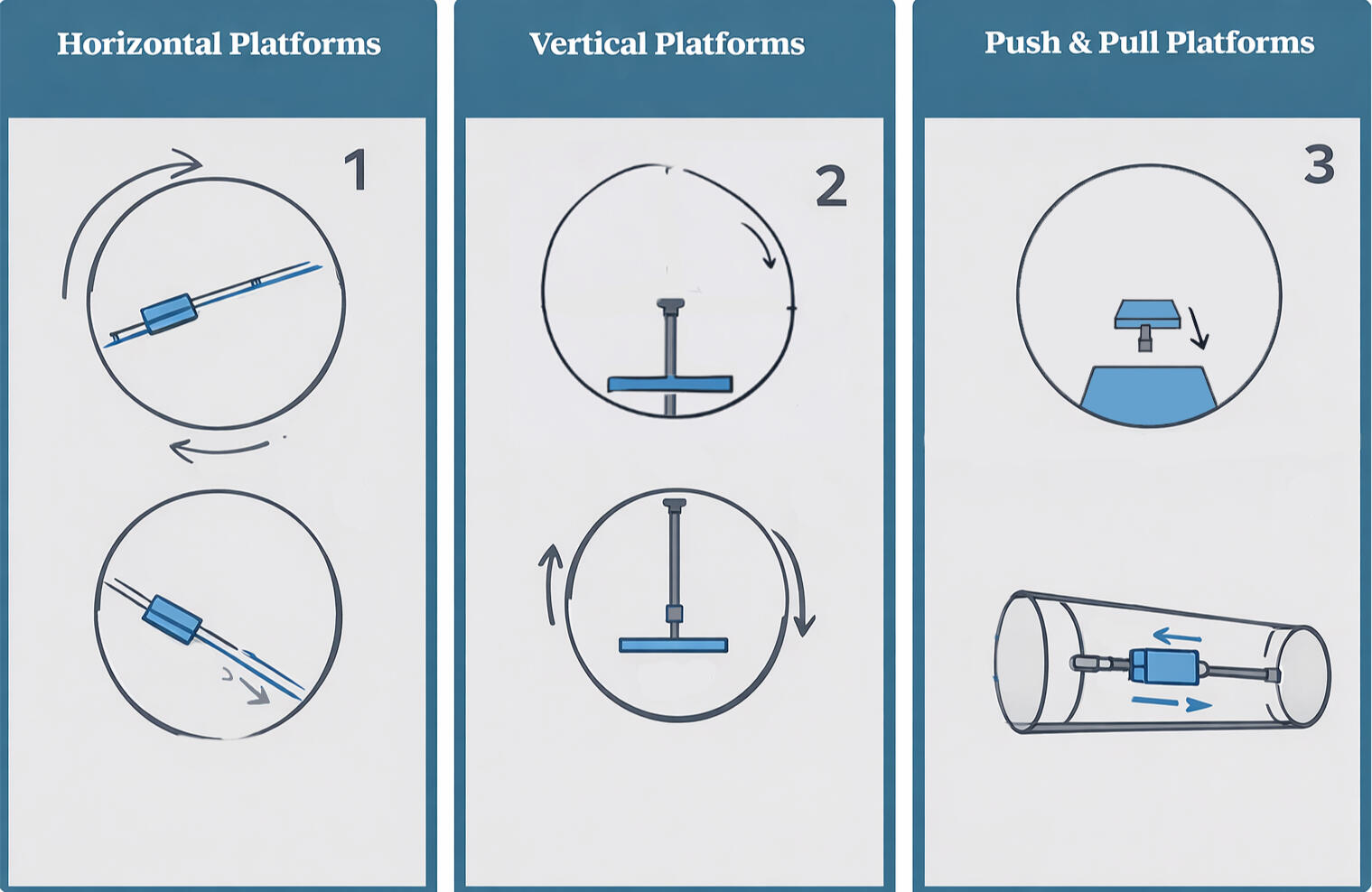
Horizontal Platforms
Used for simple timing and alignment challenges.
Vertical Platforms
Used to connect different heights inside the rotating tunnel.
Push & Pull Platforms
Used to make traversal feel more physical
Some work in progress videos of the mechanics
Interaction Design & Systems Setup
Beyond designing the platform behavior, I also worked on how these systems were actually placed and tested inside the levels.
Because the project had many moving parts, we needed a setup that was clear enough for designers, programmers, and artists to understand. I worked with puzzle tags, triggers, interaction zones, and level logic so the rotating segments, platforms, and player progression could connect properly.This was not the glamorous part of design, but it was super important. If a platform, trigger, or spawn was set up wrong, the whole puzzle could break.
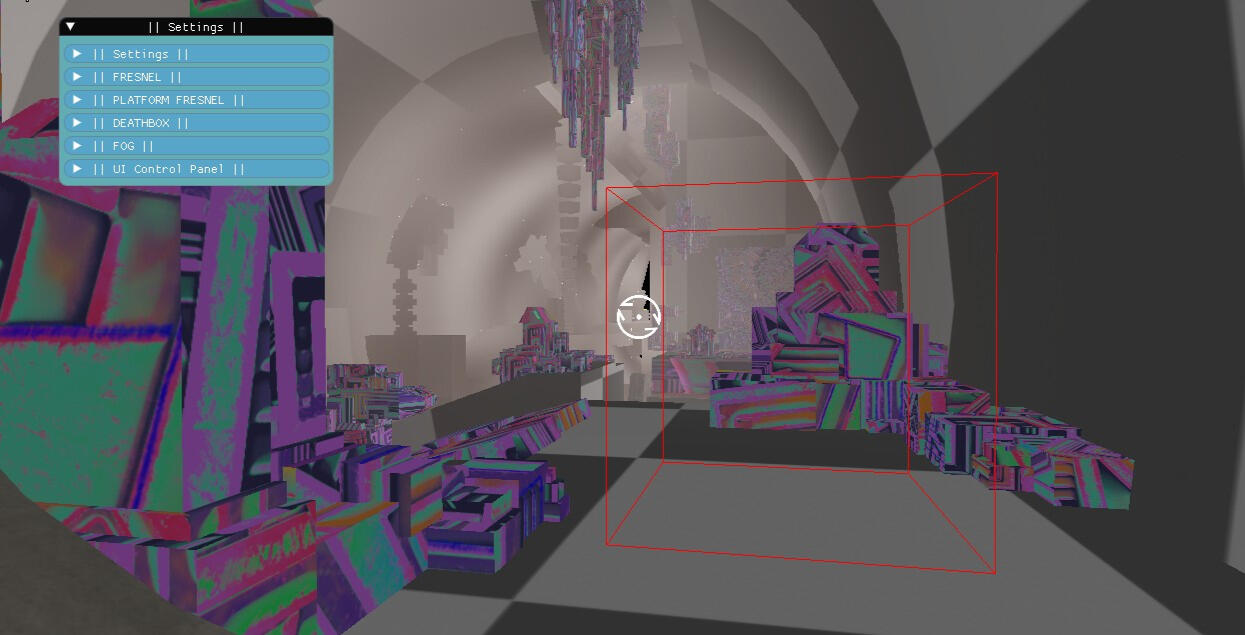
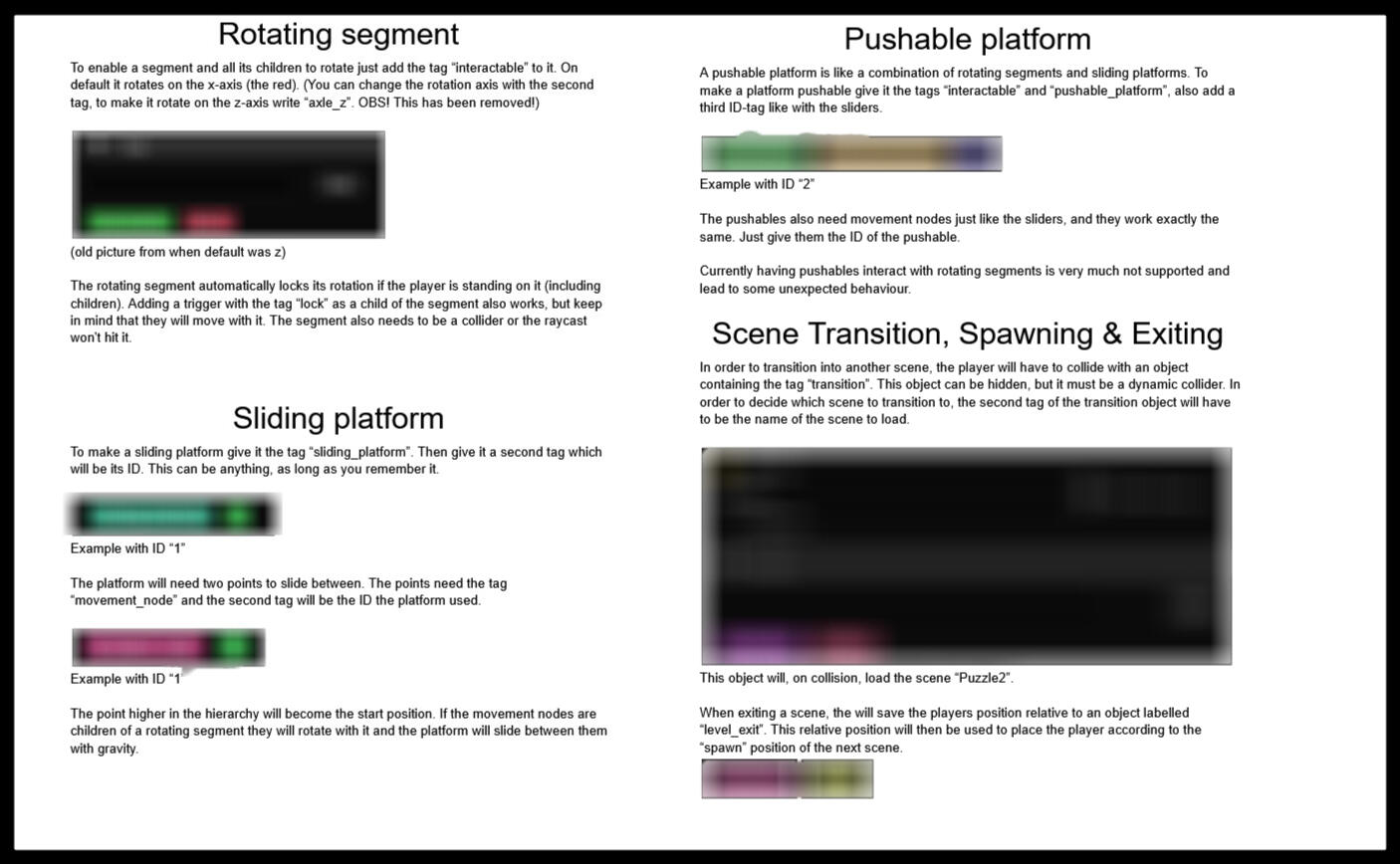
To make the workflow cleaner, I asked the programming team for a simple setup guide that explained how puzzle tags, scene transitions, platforms, and logic pieces should be placed.This helped me build and test level setups more confidently without constantly interrupting programmers or guessing how things worked. It also reduced mistakes and made it easier to keep the project moving during production.
Team Support
To support the team, I created clear blockouts and design notes that helped everyone stay aligned. Every new mechanic was taught in a space where players could try it without pressure, and without being explicitly told what to do. Our goal was to make learning feel like part of the world, not something separate from it.


The massive rotating arms were designed to overwhelm and guide the player's gaze through scale and motion

